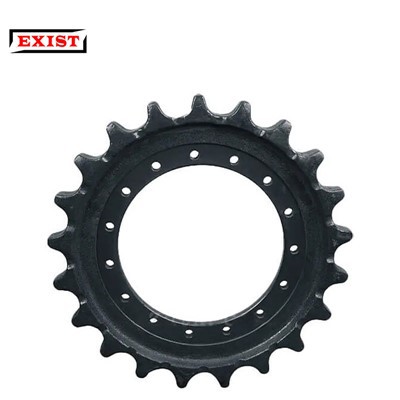
As a supplier of casting parts, I've encountered numerous obstacles when it comes to producing components with high fatigue resistance. It's a crucial aspect of the industry, especially in sectors where parts are subjected to constant stress and cyclic loading. In this blog, I'll share some of the challenges we face and how we're working to overcome them.
Material Selection
One of the primary challenges in casting parts with high fatigue resistance is choosing the right material. The material must have the necessary strength, ductility, and toughness to withstand repeated loading without failing. Different metals and alloys have varying fatigue properties, and selecting the appropriate one depends on the specific application.
For example, in the mining industry, Mining Wear Resistant Plate Precision Casting Parts are often required to endure extreme conditions. High - manganese steel is a popular choice due to its excellent work - hardening properties, which increase its resistance to wear and fatigue under impact and abrasion. However, casting high - manganese steel can be tricky. It has a relatively high melting point and a narrow solidification range, which makes it prone to hot cracking during the casting process.
Another option is Wear Resistant Steel Casting Steel and Sand Casting Parts. Alloy steels with specific compositions can offer good fatigue resistance, but they may also require precise heat treatment to achieve the desired mechanical properties. If the heat treatment is not properly controlled, the part may end up with inconsistent hardness and microstructure, which can significantly reduce its fatigue life.
Casting Process
The casting process itself presents several challenges for achieving high fatigue resistance. One of the most common issues is porosity. Porosity can occur due to various factors, such as gas entrapment during the pouring process or shrinkage during solidification. These pores act as stress concentrators, which can initiate cracks under cyclic loading and lead to premature fatigue failure.
To minimize porosity, we need to carefully control the pouring temperature, speed, and gating system design. For instance, using a proper gating system can ensure a smooth and laminar flow of molten metal into the mold, reducing the chances of gas entrapment. Additionally, the use of degassing techniques during the melting process can help remove dissolved gases from the molten metal.
Another challenge is the formation of non - metallic inclusions. These inclusions, such as oxides and sulfides, can also act as stress raisers and degrade the fatigue performance of the casting. To prevent the formation of inclusions, we need to maintain a clean melting environment and use high - quality raw materials. In some cases, filtration systems can be installed in the gating system to trap the inclusions before they enter the mold cavity.
Design Considerations
The design of the casting part plays a vital role in its fatigue resistance. Sharp corners, notches, and sudden changes in cross - section can create high stress concentrations, which are detrimental to fatigue life. Designers need to use fillets and radii at sharp corners to distribute the stress more evenly.
In addition, the part's overall shape and size can affect its ability to dissipate stress. Complex geometries may be more difficult to cast and may also have regions with uneven stress distribution. We often work closely with our customers' design teams to optimize the part design for both casting manufacturability and fatigue performance. For example, Hardware Tools Investment Casting Parts and CNC Machining Parts may require a balance between precision in shape for functionality and a design that minimizes stress concentrations.
Heat Treatment
Heat treatment is an essential step in enhancing the fatigue resistance of casting parts. However, it also comes with its own set of challenges. Different heat treatment processes, such as annealing, quenching, and tempering, can significantly alter the microstructure and mechanical properties of the material.
If the heat treatment parameters are not accurately controlled, the part may experience distortion, cracking, or inconsistent hardness. For example, during quenching, a rapid cooling rate is required to achieve high hardness, but it can also generate high internal stresses. If these stresses are not relieved through proper tempering, they can lead to cracking during subsequent use.
We need to carefully select the heat treatment process based on the material and the desired mechanical properties. This often involves conducting extensive testing and optimization to ensure that the heat treatment process is both effective and reliable.
Quality Control
Ensuring the quality of casting parts with high fatigue resistance is a continuous challenge. We need to implement a comprehensive quality control system that covers every stage of the production process, from raw material inspection to final product testing.


Non - destructive testing (NDT) methods, such as ultrasonic testing, magnetic particle testing, and X - ray inspection, are commonly used to detect internal defects in the castings. These tests can help identify porosity, cracks, and inclusions that may affect the fatigue performance of the part.
In addition, mechanical testing, such as tensile testing, hardness testing, and fatigue testing, is essential to verify the mechanical properties of the castings. Fatigue testing, in particular, can be time - consuming and expensive, but it provides valuable information about the part's ability to withstand cyclic loading.
Overcoming the Challenges
Despite these challenges, we've been able to develop strategies to produce casting parts with high fatigue resistance. We invest in research and development to stay updated on the latest materials and casting technologies. Our team of experienced engineers and technicians uses advanced simulation software to optimize the casting process and predict potential issues before they occur.
We also work closely with our customers to understand their specific requirements and provide customized solutions. By collaborating with them from the design stage, we can ensure that the final product meets their performance expectations.
Conclusion
Casting parts with high fatigue resistance is a complex and challenging task. From material selection to quality control, every step in the process requires careful consideration and attention to detail. However, with the right approach and continuous improvement, we can overcome these challenges and provide high - quality casting parts that meet the demanding requirements of various industries.
If you're in need of casting parts with high fatigue resistance, we'd love to have a chat with you. Whether you're in the mining, hardware tools, or any other industry where fatigue resistance is crucial, we're here to help you find the best solution for your needs. Let's start a discussion and see how we can work together to meet your casting part requirements.
References
- [Author's name]. (Year). [Title of the book]. [Publisher].
- [Author's name]. (Year). [Title of the article]. [Journal name], [Volume number], [Page number].