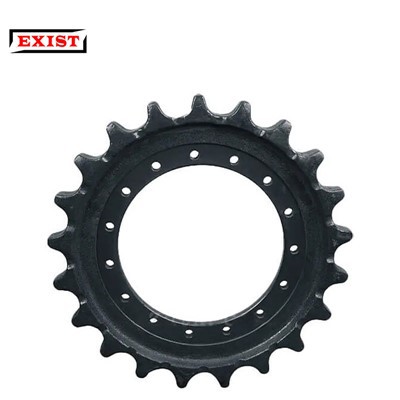
As a seasoned supplier of track rollers, I understand the critical role that concentricity plays during the installation process. Concentricity refers to the degree to which two or more circular features share the same center axis. In the context of track rollers, ensuring proper concentricity is essential for the smooth operation, longevity, and overall performance of the machinery they are installed in. In this blog, I will share some insights and practical steps on how to ensure the concentricity of track rollers during installation.
Understanding the Importance of Concentricity
Before delving into the installation process, it's crucial to understand why concentricity matters. When track rollers are not installed with proper concentricity, it can lead to a variety of issues. Uneven wear on the rollers and the track is one of the most common problems. This uneven wear can significantly reduce the lifespan of both the track rollers and the track itself, leading to premature replacement and increased maintenance costs.


Moreover, poor concentricity can cause vibrations and noise during the operation of the machinery. These vibrations can not only affect the operator's comfort but also have a negative impact on the overall stability and performance of the equipment. In extreme cases, it can even lead to mechanical failures, which can result in costly downtime and potential safety hazards.
Pre - installation Checks
The first step in ensuring the concentricity of track rollers is to conduct thorough pre - installation checks. This includes inspecting the track rollers themselves, as well as the mounting surface and the associated components.
Inspect the Track Rollers
Examine each track roller for any visible signs of damage, such as cracks, dents, or excessive wear. For example, a damaged roller surface can cause uneven contact with the track, affecting concentricity. Also, check the dimensional accuracy of the rollers. Make sure that the outer diameter, inner diameter, and width of the rollers meet the specified standards. We offer a wide range of high - quality track rollers, such as the 203 - 30 - 00140 PC100 PC120 Heavy Duty Track Rollers, which are manufactured to strict quality control standards to ensure proper dimensions.
Check the Mounting Surface
The mounting surface where the track rollers will be installed must be clean, flat, and free of any debris or irregularities. A dirty or uneven mounting surface can prevent the track rollers from sitting properly, leading to misalignment. Use a surface plate and a dial indicator to check the flatness of the mounting surface. If any irregularities are found, they should be corrected before proceeding with the installation.
Inspect Associated Components
Inspect other components such as the axles and bushings. The axles should be straight and have the correct diameter to fit the track rollers. The bushings should also be in good condition and have the proper clearance. For instance, a worn - out bushing can cause the track roller to move out of alignment, affecting concentricity.
Installation Process
Once the pre - installation checks are completed, it's time to proceed with the installation of the track rollers. Here are the steps to ensure proper concentricity during the installation:
Use the Right Tools
Using the appropriate tools is essential for a successful installation. A torque wrench is necessary to ensure that the bolts are tightened to the correct torque specification. Over - tightening or under - tightening the bolts can cause misalignment. Additionally, a dial indicator can be used to measure the concentricity during the installation process.
Align the Track Rollers
Start by placing the track rollers on the mounting surface. Make sure that they are positioned correctly and are parallel to each other. Use a straightedge or a laser alignment tool to check the alignment. If the track rollers are not aligned properly, they can be adjusted by using shims or by re - positioning the mounting brackets.
Install the Axles and Bushings
Carefully install the axles and bushings according to the manufacturer's instructions. Apply a thin layer of lubricant to the axles and bushings to reduce friction and ensure smooth operation. Make sure that the axles are inserted straight into the track rollers and that the bushings are properly seated.
Tighten the Bolts
Once the track rollers, axles, and bushings are in place, tighten the bolts to the specified torque using a torque wrench. Tighten the bolts in a criss - cross pattern to ensure even distribution of the load. This will help to prevent the track rollers from becoming misaligned during the tightening process.
Check the Concentricity
After the bolts are tightened, use a dial indicator to check the concentricity of the track rollers. Mount the dial indicator on a stable surface and position the probe against the outer surface of the track roller. Rotate the track roller slowly and observe the readings on the dial indicator. The variation in the readings should be within the acceptable tolerance range. If the concentricity is not within the tolerance, adjustments may need to be made.
Post - installation Verification
After the installation is complete, it's important to conduct post - installation verification. This includes running the machinery for a short period and checking for any abnormal noises, vibrations, or signs of uneven wear. If any issues are detected, the concentricity of the track rollers should be re - checked and corrected if necessary.
Common Mistakes to Avoid
There are several common mistakes that can lead to poor concentricity during the installation of track rollers. One of the most common mistakes is not following the manufacturer's instructions. Each type of track roller may have specific installation requirements, and it's important to adhere to these guidelines to ensure proper installation.
Another mistake is using incorrect tools or failing to use tools properly. For example, using a regular wrench instead of a torque wrench can result in uneven tightening of the bolts, leading to misalignment. Additionally, not conducting thorough pre - installation and post - installation checks can allow problems to go undetected, which can affect the concentricity and performance of the track rollers in the long run.
Conclusion
Ensuring the concentricity of track rollers during installation is a critical process that requires careful attention to detail. By conducting thorough pre - installation checks, using the right tools, following the correct installation procedures, and performing post - installation verification, you can minimize the risk of misalignment and ensure the smooth operation and longevity of the track rollers.
If you are in the market for high - quality track rollers, we have a wide range of products to meet your needs, such as the 1634143 E320 Bottom Roller Excavator Track Roller and the 207 - 30 - 00150 Komatsu PC300 Single Flange Track Roller. Contact us today to discuss your specific requirements and let us help you find the perfect track roller solution for your machinery.
References
- Handbook of Industrial Maintenance and Engineering
- Machinery's Handbook