In the realm of formal writing, the appropriate use of language is of paramount importance. One word that often raises questions regarding its suitability for formal contexts is "idler." As a supplier of idlers, I have a unique perspective on this topic, which combines both the technical understanding of the product and the nuances of language usage.
The Dual Meanings of "Idler"
The word "idler" has two primary meanings. The first, and perhaps more commonly known, refers to a person who is lazy or avoids work. For example, in a sentence like "He was labeled an idler because he spent most of his days lounging around," the term clearly has a negative connotation. This usage is more colloquial and is typically found in informal conversations, literature, or when describing human behavior in a non - technical setting.
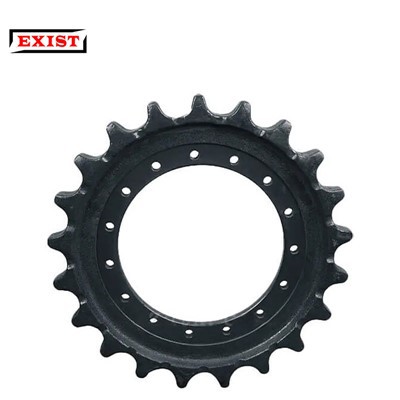
On the other hand, in the technical and industrial context, an idler is a mechanical component. It is a pulley or roller that is used to guide or tension a belt, chain, or cable in a machine. For instance, in construction equipment such as bulldozers and excavators, idlers play a crucial role in supporting the undercarriage and ensuring the smooth operation of the tracks. As a supplier of idlers, I deal with a wide range of these mechanical parts, including the 20Y - 30 - 43310 Komatsu Idler Dozer Idler PC200 Idler and the 9242965 ZAX200 Front Idler Zaxis Excavator Idler.
Using "Idler" in Formal Writing: The Technical Sense
When it comes to formal writing in technical, engineering, or business documents, the use of "idler" in its mechanical sense is not only appropriate but also necessary. In technical manuals, product specifications, and engineering reports, the term is used to precisely describe a specific component. For example, an engineer writing a report on the maintenance of a construction machine might state, "The idler on the undercarriage of the bulldozer needs to be inspected regularly for wear and tear." This usage is clear, concise, and in line with the standards of formal technical communication.
In business - to - business (B2B) communication, such as sales proposals or contracts, the term "idler" is also commonly used. A supplier might write, "Our company offers high - quality idlers for various construction equipment models, ensuring optimal performance and durability." Here, the word serves as a professional and industry - recognized term that both the supplier and the potential client understand.
Avoiding Confusion in Formal Writing
However, when using the word "idler" in formal writing, it is essential to avoid confusion between its two meanings. To ensure clarity, it is often a good idea to provide some context or use additional descriptive words. For example, instead of simply saying "idler," one could say "mechanical idler" or "undercarriage idler" to make it clear that the reference is to the technical component.
In some cases, if there is a risk of misinterpretation, it might be better to use a more specific term. For instance, instead of "idler," one could use "track idler" or "belt idler" depending on the application. This helps to eliminate any ambiguity and ensures that the reader understands the exact meaning.
The Colloquial Meaning in Formal Writing
As mentioned earlier, the colloquial meaning of "idler" as a lazy person is generally not suitable for formal writing. In academic papers, business correspondence, and official reports, using this sense of the word can come across as unprofessional or even derogatory. For example, in a performance review, saying "The employee is an idler" is a very subjective and potentially offensive statement. Instead, more objective and constructive language should be used to describe an employee's performance issues.
Industry - Specific Formal Writing
In the idler supply industry, formal writing takes on a unique character. Product catalogs are an important form of formal communication. These catalogs need to provide detailed information about the idlers, including their dimensions, materials, and compatibility with different equipment models. For example, a product description in a catalog might read, "The 20Y - 30 - 43310 Komatsu Idler is made of high - strength steel and is designed to fit perfectly with Komatsu PC200 dozers, providing reliable support for the undercarriage system."


In addition, sales and marketing materials also require formal and accurate language. When promoting idlers to potential customers, it is important to use language that is both persuasive and professional. For example, a marketing email might state, "Our idlers are engineered to meet the highest industry standards, offering superior performance and long - lasting durability. Whether you need a 20Y - 30 - 43310 Komatsu Idler Dozer Idler PC200 Idler or a 9242965 ZAX200 Front Idler Zaxis Excavator Idler, we have the right solution for your construction equipment."
Conclusion
In conclusion, the word "idler" can be used in formal writing, but its suitability depends on the context. In technical, engineering, and industry - specific formal writing, the mechanical sense of the word is not only appropriate but also essential for clear and accurate communication. However, the colloquial meaning of "idler" as a lazy person should generally be avoided in formal settings.
If you are in the market for high - quality idlers for your construction equipment, we are here to assist you. Our wide range of idlers, including the 20Y - 30 - 43310 Komatsu Idler Dozer Idler PC200 Idler and the 9242965 ZAX200 Front Idler Zaxis Excavator Idler, are designed to meet the highest standards of quality and performance. Please feel free to reach out to us to discuss your specific requirements and start a procurement negotiation.
References
- Merriam - Webster Dictionary. Definition of "idler."
- Various technical manuals and product specifications in the construction equipment industry.